

This week I was featured on the Amazing Stories website in a series that profiles Space Artists, members of the IAAA (International Association of Astronomical Artists). I’m honored and privileged to have been selected for this article alongside artists that I’ve looked up to over the years. If you get a chance, check it out:
Category: User Experience
-

From Industrial Design to User Experience Design, a long strange path
The decision to study Industrial Design in college was a simple one for me, as it combined many of the skills that I already enjoyed growing up as an artist, model builder, and addressed my fascination with cool gadgetry. �I’d already finished a 2 year program in Film Production, and wanted to build out my design skills. If nothing else, a degree in Industrial Design would open many doors, perhaps ones that I hadn’t considered when I started the program.
Little did I know how big one of those doors would be. By the time I’d graduated with a BFA in Industrial Design from Kendall College of Art & Design, the software industry had exploded. Suddenly there were opportunities for people with my skills – product design, human factors, ergonomics, graphic design with digital tools. It was a time when there were few programs dedicated to cranking out user experience software designers.
I was already steeped in state of the art UI Design at the time, having worked for a local Engineering and Architectural computer consultancy. We provided hardware and CAD/CNC software for a variety of companies, most of which supported West Michigan’s automotive, office�furniture, and architectural industries. In an area that had few computer technology companies, I’d quickly become a subject matter expert. As I look back this path almost�appears to be ‘by design’.
Today there are many more university programs dedicated to producing designers specifically for the software industry. I’ve often wondered, were I facing the same decision, going into college today, would I still find Industrial Design more appealing? The answer, after careful consideration, is always yes I would lean more towards Industrial Design. But that’s a choice I would make knowing that I personally enjoy product design – as in design of objects, forms, and experiences – as opposed to designing for a 2 dimensional screen.
As it has turned out, my ID background has served me well, and over the years I’ve enjoyed a number of roles that did land me in the product design space. With software UI Design becoming more of a commodity, I’m finding myself looking outside the field, considering the other possible doors for someone with my range of skills.
It’s all part of the ride.
-
What’s an Experience Designer?
UX Designer is a term shortened from User Experience Designer. It’s an�amalgam�of several distinct roles which have evolved �since software became recognized as a valuable tool. In the earlier days someone who drew what they thought the screens in your project should look like, you were called a UI Designer, or User Interface Designer. As software rapidly became more complex, information architects were called upon to draft meticulous diagrams, mapping data structures and content. To better understand what people are really doing with software, a legion of Usability Researchers grew their craft – wielding a rich combination of behavioral psychology and a deep understanding of their product’s technicalities.
As needs have changed, business structures altered, there is often less of a distinction between these roles, although User Research has stayed true to its roots. As it should. Today the title User Experience Designer has become more of an umbrella term, encompassing a range of skills that includes user assessment, information architecture, workflow analysis, and graphic design. Most User Experience Designers possess a strong understanding of at least one of these. The best can operate effectively at all of them. The best are rare, indeed.
So why should anyone want to bring someone with such distributed skills into their organization? The reality is, each individual piece of the UX Designer’s mantle can be easily filled by contracted individuals, some can be distributed to existing team members, and maybe your organization is running at such a pace that you do not have time to consider something as esoteric as User Experience. Your organization probably doesn’t need a User Experience Designer. You’ve got it all covered.
In reality, most engineering organizations operate too close to the code to pay attention to the big picture. And that big picture is what the people will see when they try to use your online experience, mobile app, social experience, or dedicated administration tool. If you get it wrong, you will have few chances to turn the tide. You’re gambling on the patience level of your average user, and the only way to hedge your bet is by having a huge installed user base who see themselves as having few options aside from yours. Good luck.
Or, you can look to a discipline that is by nature designed to bring awareness of that big picture to your project. Someone who can help provide�guidance�and direction early on, or to raise a red flag when things are going in a bad direction. Perhaps someone whose sole purpose is to keep an eye on what your users will see and experience. After all, it’s the users who are ultimately paying the bills.
-

Start the clock…
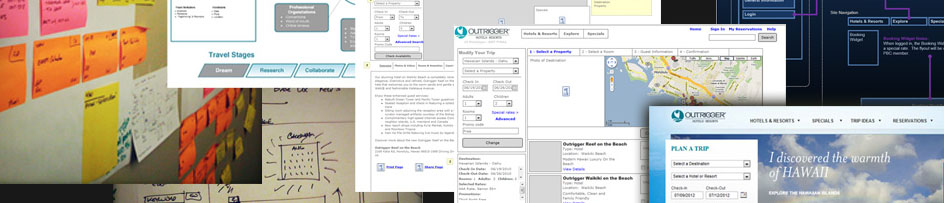
Starting in 2009 I began taking a new look at my career as a User Experience Designer, analyzing my own motivations and noting the types of projects that drew my undivided attention, and the ones that were unbearable. I had the opportunity to try different User Experience Design jobs, in a variety of organizations from a start-up, to a world-renown digital agency. In only a couple of years I worked on a lot of exciting projects, across multiple platforms. I designed my first mobile apps, a wonderful hotel website, and even got my hands into hardware design again.
In the end there were, alarmingly, far more similarities between the projects I classified as exciting, and those that were pure drudgery with the difference being largely one of an organizational nature. Did the business or team support design as a discipline? Many claimed they did, some denied it, others embraced it. It’s not difficult to deduce which types of organizations I found less appealing. Not satisfied with the initial results, I extended the scope of my analysis to include my numerous, yet creative hobbies. There was a bit of overlap in the positives between my after-hours creative pursuits, and the design work that used up the rest of my days. This was re-assuring to me, as it’s likely that I’ll continue in my field for quite some time.
In re-building my online portfolio, a task all designers must face on a semi-regular basis, I’ve decided it would be a lie of omission to show only my work as a User Experience Designer in the software industry. It’s not the whole picture of who I am, and what I do. And at the risk of diluting my brand as a UX Designer, I’ve decided to include some of the other kinds of work that I’ve done. I’ll keep the focus on creative projects, and share as I go. Welcome aboard.