Category: Industrial Design

  • Introducing the Space Art Academy

    Introducing the Space Art Academy

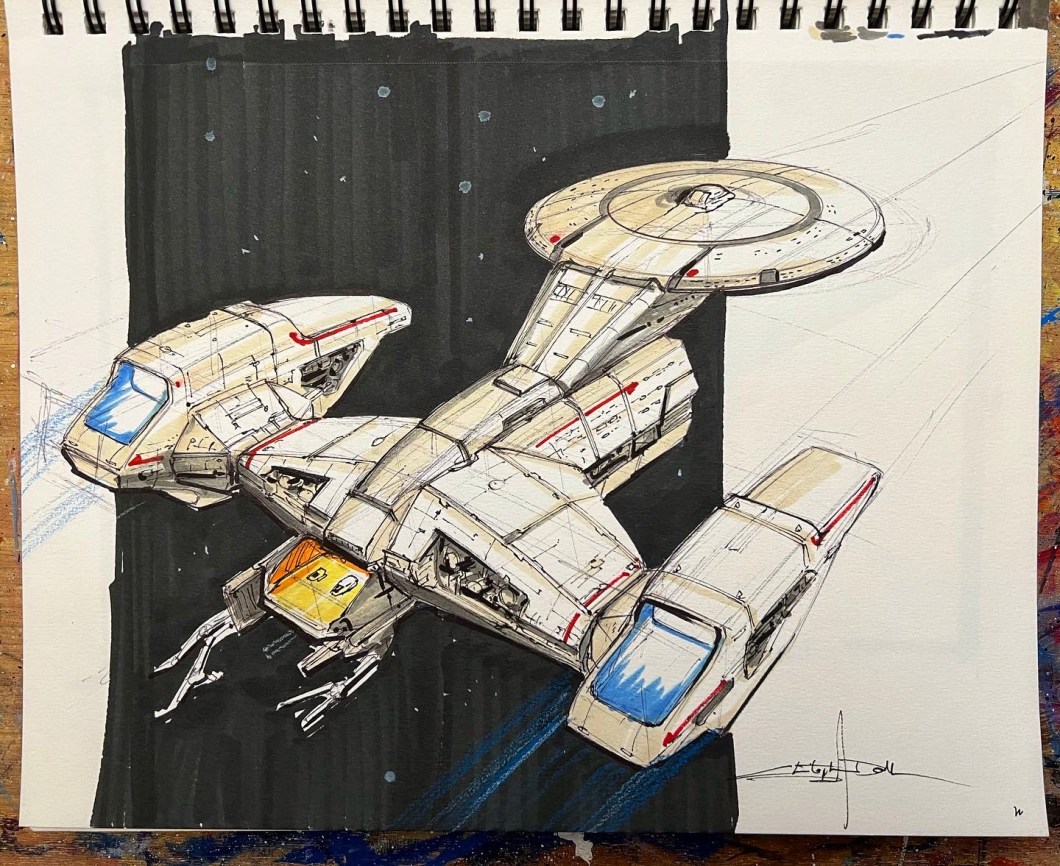
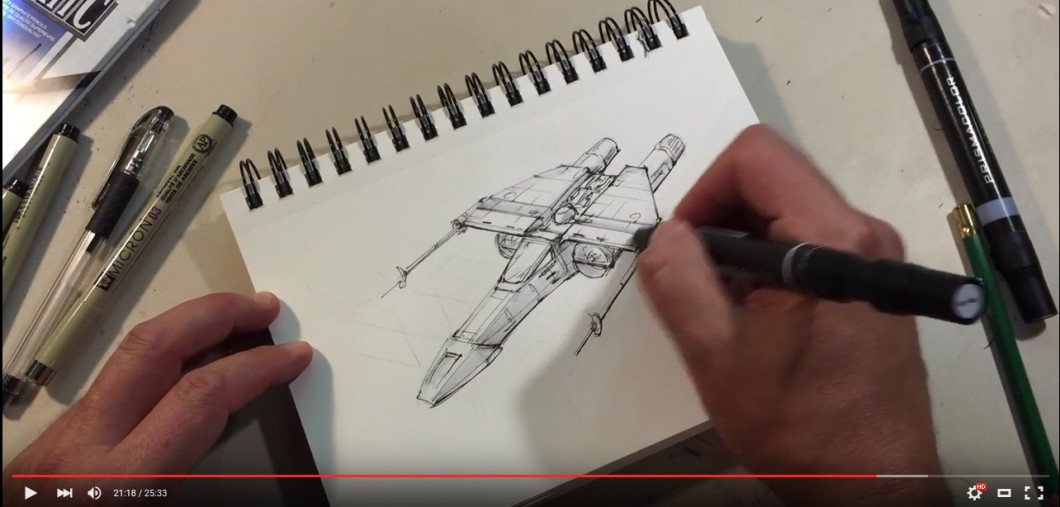
    I am thrilled and terrified to announce my Space Art Academy. Thrilled because I enjoy teaching art and design. We are going to have a great time drawing starships, or painting a galaxy. The terror is only in my own mind, as any new venture risks failure.

    The Space Art Academy is where I will offer a range of courses on all aspects what I like to call Space Art. I’m relaxed with the term Space Art. To me it encompasses both astronomical space of the real variety, for there is great beauty in space both near and far. It also includes the wild fantasy side, science fiction, and realms of the unbelievable. All require the same skills – drawing, light and shadow, color, composition, and that extra magic that only a human can bring to a great painting.

    Why Now?

    I want to teach everything I have learned about drawing, design, illustration, color, and fine art. This is the culmination of decades of personal and professional experience based on a core foundation of Industrial Design illustration. My confidence is high when it comes to discussing the principles and practices of drawing and illustration. I might even go so far as to say I have an angle on fine art as well. I’ll leave it to you to decide if I can be so bold.

    As much as these courses are for you, or anyone who wishes to learn Space Art, they will be a watershed for myself. It’s making me analyze my own work with great scrutiny.

    Who Could Use These Courses?

    Anyone with the skill to find this blog post and read it will be more than qualified for the material in these classes. Complete novices will get years of practical knowledge, and they can keep all the material for reference later. Seasoned artists will also find gems.

    How Will This Work?

    Each course will be broken into individual video chapters. Some of these chapters will have reference material or worksheets (varies depending on the course). The materials can be downloaded upon purchase (and subsequent release). I will be available for questions via a dedicated Discord channel, the link will be provided with the course materials.

    PREVIEW CLASSES ON PATREON

    Patreon members have already seen some of the materials I’ve prepared for the first course, How to Draw Starships 101. With their input, I’ve adjusted the scope of these courses and I’m very happy with the final direction. If you want in on developing future courses, or if you’d like to see them early, consider signing up over on my Patreon. You’ll also receive additional discounts on all courses as a Patreon member.

    How to Draw Starships 101

    Starships are the human conveyances in our favorite science fiction stories. They have a soul, like sailing ships in our own past. In our debut course I will start with a foundation of drawing skills, which we will use to explore different types of starships.
    HOW TO DRAW STARSHIPS 101

    Original price was: $80.00.Current price is: $69.00.

    What is next?

    How to Draw Starships 101 will release in early July. I will then turn my attention on the next course, an exploration of color theory. Our first semester will end with a course on constructing a complete Space Art scene.

    These courses will never cover all aspects their respective subjects. I will expand each line, and add more as necessary. Personally I can’t wait until I can start sharing the work of all of our Space Art Academy students.


  • Featured on Amazing Stories Magazine

    Featured on Amazing Stories Magazine

    This week I was featured on the Amazing Stories website in a series that profiles Space Artists, members of the IAAA (International Association of Astronomical Artists). I’m honored and privileged to have been selected for this article alongside artists that I’ve looked up to over the years. If you get a chance, check it out:

    IAAA Gallery: Christopher Doll – Experience Designer

  • New Directions

    New Directions

    Today is my last day at Vertafore, a software company where I’ve spent the last year as a User Experience Designer near my home in Bothell, Washington. It’s always a bit sad to leave those you’ve grown to know and have worked with over a period of time, and I am fortunate to have worked with one of the best teams of UX Designers and Researchers in my entire career, but I couldn’t pass up the chance to take things in a new direction.

    For me, 2013 marks my return to the freelance world and an exciting opportunity within the e-Commerce space. But that’s not all. This move will provide greater freedom for me to see if I can turn some of my hobbies into something that will support themselves and, more importantly, my family.

    I have no illusions that any of this will work out the way that I imagine when I allow myself to dream about the greener grass on the other side of the fence. Although I may have the necessary skills, at least to a sufficiently meaningful level of quality, success or failure will depend on how well (or poorly) I manage the basics like motivation, the procrastination demons, and self-doubt. Luckily I’m gifted with just enough self-delusion to make this sort of thing work out, in the long run.

    If nothing else, it’ll be an exciting ride. Cheers to 2013!

  • From Industrial Design to User Experience Design, a long strange path

    From Industrial Design to User Experience Design, a long strange path

    The decision to study Industrial Design in college was a simple one for me, as it combined many of the skills that I already enjoyed growing up as an artist, model builder, and addressed my fascination with cool gadgetry. �I’d already finished a 2 year program in Film Production, and wanted to build out my design skills. If nothing else, a degree in Industrial Design would open many doors, perhaps ones that I hadn’t considered when I started the program.

    Little did I know how big one of those doors would be. By the time I’d graduated with a BFA in Industrial Design from Kendall College of Art & Design, the software industry had exploded. Suddenly there were opportunities for people with my skills – product design, human factors, ergonomics, graphic design with digital tools. It was a time when there were few programs dedicated to cranking out user experience software designers.

    I was already steeped in state of the art UI Design at the time, having worked for a local Engineering and Architectural computer consultancy. We provided hardware and CAD/CNC software for a variety of companies, most of which supported West Michigan’s automotive, office�furniture, and architectural industries. In an area that had few computer technology companies, I’d quickly become a subject matter expert. As I look back this path almost�appears to be ‘by design’.

    Today there are many more university programs dedicated to producing designers specifically for the software industry. I’ve often wondered, were I facing the same decision, going into college today, would I still find Industrial Design more appealing? The answer, after careful consideration, is always yes I would lean more towards Industrial Design. But that’s a choice I would make knowing that I personally enjoy product design – as in design of objects, forms, and experiences – as opposed to designing for a 2 dimensional screen.

    As it has turned out, my ID background has served me well, and over the years I’ve enjoyed a number of roles that did land me in the product design space. With software UI Design becoming more of a commodity, I’m finding myself looking outside the field, considering the other possible doors for someone with my range of skills.

    It’s all part of the ride.